
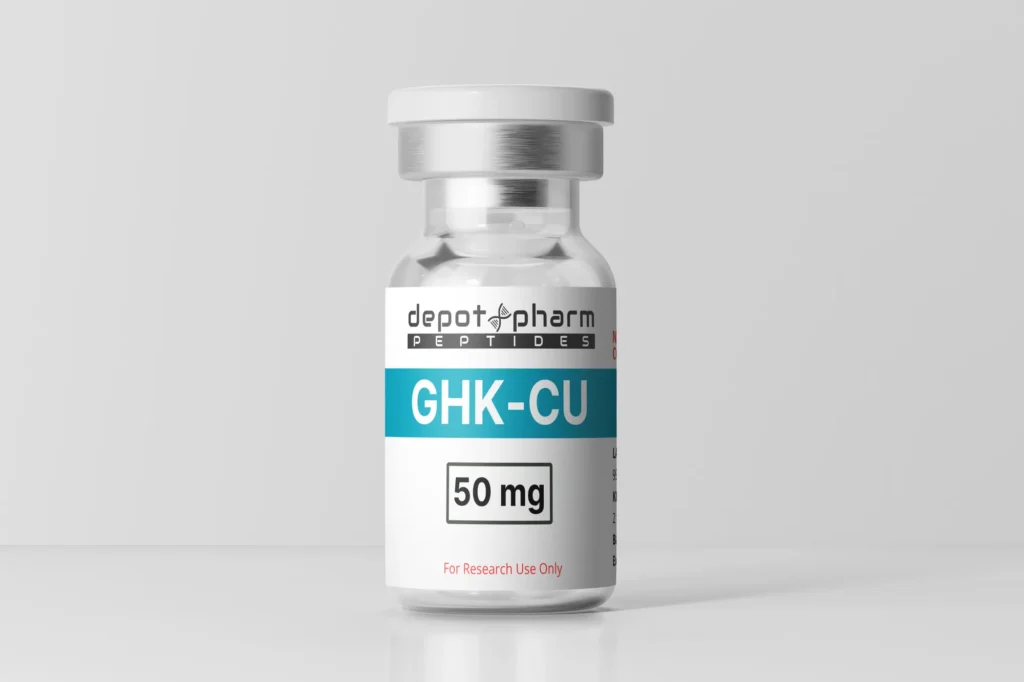
GHK-Cu (glycyl-L-histidyl-L-lysine copper complex) is one of the longest-studied peptides in dermatological and regenerative research, with a published history stretching back over fifty years. It occurs naturally in human plasma, saliva, and urine, and its concentration is known to decline with age.
What It Is
First isolated in 1973, GHK is a small tripeptide (under 700 Da) that binds copper(II) ions to form the biologically active GHK-Cu complex. The vast majority of its documented effects require this copper-bound form.
Proposed Mechanism of Action
GHK-Cu is described in the literature as a broad modulator of gene expression, influencing an estimated 4,000+ genes in human studies of skin biology — upregulating roughly 59% of affected genes and suppressing the remaining 41%. This wide-reaching activity is thought to explain its involvement in several distinct biological processes rather than a single, narrow pathway.
What Research Shows
Skin and wound repair: Studies report improved wound contraction and epithelialization, along with stimulation of collagen, elastin, and glycosaminoglycan synthesis, and increased growth-factor production.
Anti-inflammatory activity: Research has recorded reduced inflammatory cell infiltration and lower levels of pro-inflammatory markers such as TNF-α and IL-6 in both lung-injury models and dermal fibroblast studies.
Antioxidant effects: GHK-Cu has been shown to increase superoxide dismutase activity, quench reactive carbonyl species, and reduce lipid oxidation, with some studies reporting protection against UV-induced damage.
DNA repair signaling: Gene-expression studies found GHK-Cu stimulated 47 DNA-repair-associated genes while suppressing only 5, and reversed radiation-induced impairment of collagen and growth-factor synthesis in irradiated fibroblasts.
Early-stage anti-cancer research: Gene-profiling work has identified dozens of cancer-inhibitory genes upregulated by GHK-Cu, along with apoptosis activation in certain cancer cell lines at nanomolar concentrations. This line of research remains preliminary and is based almost entirely on cell-culture and animal-model data.
Safety & Regulatory Notes
Copper peptides have a long track record in topical cosmetic use and are generally regarded as having a favorable safety profile in that context. However, the anti-cancer and systemic findings summarized above come almost exclusively from in-vitro, animal, or gene-expression studies; human clinical trials for these specific applications remain limited, and therapeutic claims are not established.
This article is for general scientific and educational purposes only. GHK-Cu, like every peptide sold by Depot Pharm Peptides, is supplied strictly for laboratory research use and is not intended for human or animal consumption, diagnostic, or therapeutic use.