
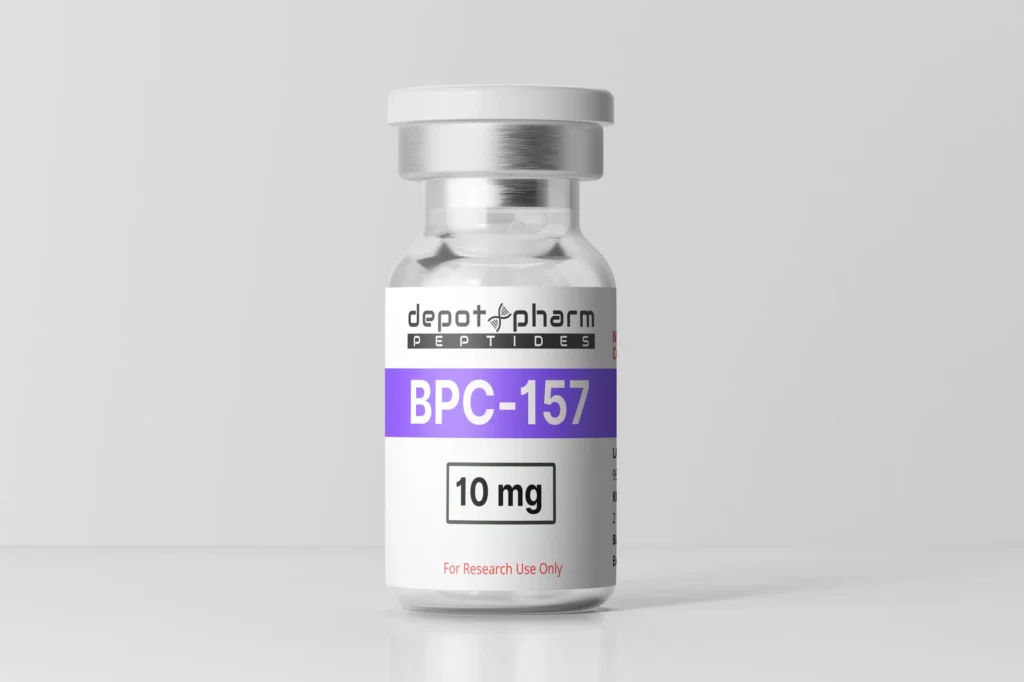
BPC-157 (Body Protection Compound-157) is a synthetic 15-amino acid peptide derived from a protective protein originally identified in human gastric juice. It is one of the most widely discussed peptides in the research-chemical space, largely because of its consistent activity across a broad range of preclinical tissue-repair models.
What It Is
Structurally, BPC-157 (sequence GEPPPGKPADDAGLV) is a stable, partial-sequence fragment with a molecular weight of roughly 1,419 Da. Unlike most peptides, it retains activity in highly acidic environments, a property researchers attribute to its N-terminal polyproline structure.
Proposed Mechanism of Action
No single high-affinity receptor for BPC-157 has been identified, and its precise molecular target remains formally unknown. Current research points to activity across several overlapping pathways, including activation of VEGFR2 (supporting new blood vessel formation), upregulation of the Egr-1 transcription factor associated with tissue-repair gene networks, and modulation of the nitric oxide system linked to cytoprotective effects.
What Preclinical Research Shows
The bulk of published data comes from animal and in-vitro models spanning the musculoskeletal, gastrointestinal, cardiovascular, and central nervous systems. Reported findings include accelerated tendon, ligament, and bone healing in rodent models, gastrointestinal cytoprotection following induced injury, and neuroprotective activity in spinal cord and brain injury models. Notably, biological effects have been observed to persist for hours to days after a single administration, despite a very short plasma half-life — a disconnect researchers have not yet fully explained.
An important caveat: the large majority of published BPC-157 studies originate from a single research group, and independent replication remains limited.
Human Clinical Evidence
Human data is sparse. Only a small number of uncontrolled pilot studies involving fewer than 30 total subjects have been published, no completed Phase II trials exist, and no standardized pharmaceutical-grade formulation has been used in any human study to date.
Safety & Regulatory Notes
No consistent organ-level toxicity has been reported in preclinical studies, but regulatory bodies have flagged the compound for insufficient human safety and efficacy data. It is not an FDA-approved drug, and researchers should treat it strictly as an investigational compound.
This article is for general scientific and educational purposes only. BPC-157, like every peptide sold by Depot Pharm Peptides, is supplied strictly for laboratory research use and is not intended for human or animal consumption, diagnostic, or therapeutic use.